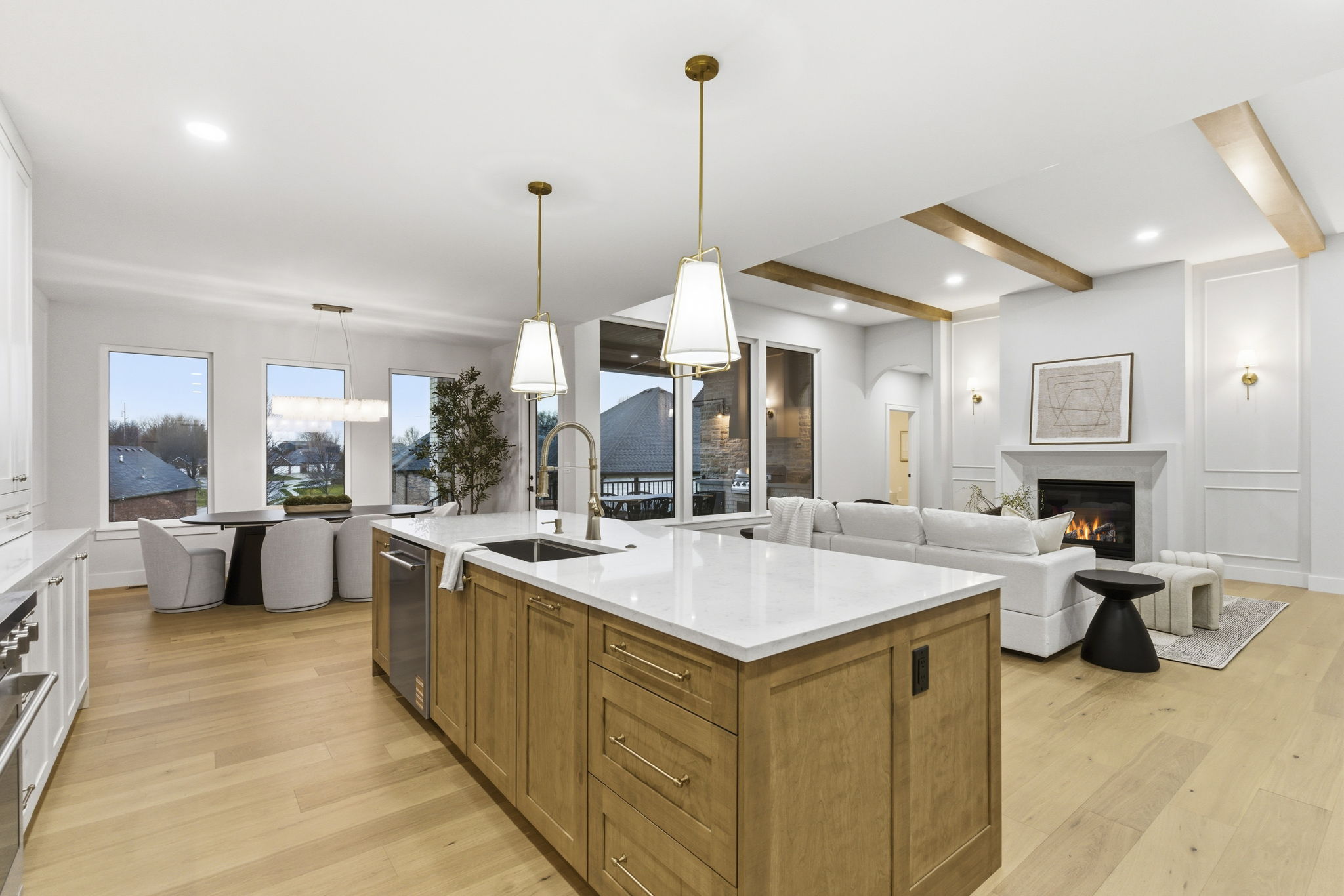
If you're listing a home in Springfield, Nixa, Ozark, or anywhere in the 417, you're facing a real decision: stage it vacant, or stage it while the seller still lives there?
Most agents assume occupied staging is the budget option. Most sellers assume vacant means empty photos. Both assumptions are wrong.
Here's the honest answer: in Southwest Missouri, vacant staging usually sells homes faster. Not always. But most of the time, the math and the market both point the same direction.
We've staged properties both ways. We've seen what works on real listings. This post breaks down when each approach wins, what it costs, and how to decide for your specific property.
Why vacant staging dominates Springfield listings
Vacant staging means the seller has moved out, the home is empty, and we install furniture specifically chosen to sell the house. No personal items. No compromises. No coordinating around someone's work schedule.
Here's why it works in Springfield:
1. Photos are cleaner.
Springfield buyers scroll Zillow and Realtor.com before they ever call an agent. If the listing photos look cluttered, dated, or too personal, they skip it. Vacant staging gives the photographer a blank canvas. Every room looks intentional. No family photos on the mantle. No mismatched furniture that distracts from the bones of the house.
We've seen this on back-to-back comps in Wildhorse. Same square footage, same price range, same agent. The vacant-staged listing got 40% more showings in the first two weeks. The occupied one sat.
2. Showings are easier.
No advance notice. No "please remove the dog." No seller hovering in the kitchen while buyers walk through. Agents can schedule back-to-back showings without coordinating anyone's life. Buyers spend more time in each room because they're not worried about being rude.
In a market where most serious buyers tour 8–12 homes before making an offer, easy showings matter. If your listing requires 24-hour notice and the seller's furniture makes the living room feel small, buyers move on.
3. It signals the seller is serious.
When a Springfield buyer sees vacant staging, they know: this seller has already moved. They're not emotionally attached. They want to close. That changes the negotiation. Buyers make stronger offers on homes where they sense urgency on the other side.
We've had agents tell us this directly: vacant staging shifts the psychological leverage. It's not just about making the house look good. It's about signaling that the seller is ready to transact.
4. The time-on-market math works.
Most Springfield-area listings under $500K move in 30–45 days if priced right and presented well. Vacant staging fits that timeline perfectly. Our standard package includes a 45-day staging term — living room, dining room, kitchen, primary bedroom, two bathrooms. All included. No extensions needed for the majority of listings.
If the house sells in 30 days, you de-stage early. If it takes 50, we extend at a reduced rate. The structure matches the reality of how homes sell here.
When occupied staging actually wins
Occupied staging isn't dead. It works in specific scenarios. Here's when we recommend it:
1. The seller's furniture is better than ours.
Rare, but real. If you're listing a $750K+ home in Fremont Hills or Southern Hills and the seller has high-end, well-maintained furniture that fits the space, occupied staging can work. We come in, edit what's there, add a few accent pieces, rearrange for flow, and style the details.
This only works if the existing furniture is genuinely good. Not "nice for a lived-in home." Actually good. Neutral colors. No wear. Scaled correctly for the rooms.
2. The seller genuinely cannot move yet.
Job transfer delayed. New construction not ready. School year mid-term. We get it. If the seller physically cannot vacate before listing, occupied staging is the fallback.
But here's the trade-off: the photos will never be as clean as vacant. The showings will be harder to coordinate. The house will feel smaller because real people's real stuff is everywhere. You're staging with one hand tied behind your back.
3. The buyer pool expects "lived-in" cues.
In a handful of niche markets (think historic downtown properties with quirky layouts, or older homes where buyers are looking for character over polish), occupied staging can signal authenticity. Some buyers see an empty Victorian on Walnut and think "flip." They see one with carefully curated vintage furniture and think "charm."
This is the exception. For standard Springfield subdivisions built in the last 30 years, vacant wins every time.
The cost argument (and why it's misleading)
Most sellers hear "occupied staging" and assume it's cheaper because we're working with what's already there. Not quite.
Here's the honest breakdown:
Occupied staging costs:
- Consultation and design plan
- Rental accent pieces (art, mirrors, throws, decor)
- Install and styling labor
- De-staging
Vacant staging costs:
- Full furniture rental (5 rooms in our standard package)
- Design plan
- Delivery, install, styling
- De-staging
Yes, vacant staging costs more upfront. But the time-on-market difference usually covers it. If vacant staging gets you under contract 10 days faster, you've saved 10 days of mortgage, utilities, and lawn care. On a $350K listing in Nixa, that's easily $500–$800 in carrying costs.
The math works almost every time.
If you want to see real numbers for your specific listing, get a quote. We price every project individually because every home is different.
How to decide for your listing
Walk through these questions with your agent:
1. Is the seller still living in the home?
If yes, can they move out before listing? Even temporarily? If the answer is yes, vacant staging is almost always the better play.
2. What's the price point?
Under $400K in Springfield? Vacant staging. You're competing with 30 other listings in the same school district. Clean photos and easy showings win.
Over $700K? Maybe occupied if the existing furniture is legitimately high-end. But even then, we've staged vacant luxury listings in Southern Hills that moved in under 21 days because the photos were flawless.
3. How's the current market?
If inventory is low and homes are moving fast (like Springfield saw in early 2025), vacant staging accelerates an already-hot listing. If inventory is higher and buyers are pickier, vacant staging becomes even more critical. You need every advantage.
4. What does the photographer say?
A good real estate photographer will tell you the truth: they can make any home look decent. But they can make a vacant-staged home look exceptional. If your listing photos are the first impression, why compromise?
What our standard vacant staging includes
Since most Springfield listings benefit from vacant staging, here's what you're actually getting:
Our standard package covers five rooms:
- Living room
- Dining room
- Kitchen (styled counters, table setting, decor)
- Primary bedroom
- Two bathrooms (vanity accessories, shower styling)
Plus a 45-day staging term, design plan, delivery, install, and de-staging when it sells. All included.
If you need additional bedrooms, an office, a bonus room, or outdoor patio staging, those are priced separately based on scope. Builder and investor clients with multiple properties get volume pricing across their portfolio.
For more on how vacant staging works in Springfield, see our full breakdown at Vacant Home Staging Springfield, MO.
The Springfield-specific advantage
Here's something most national staging companies don't get: Southwest Missouri buyers value space and light. They want to see how furniture actually fits in a room. They want to imagine their life in the house without being distracted by someone else's life.
Vacant staging delivers that. Occupied staging fights it.
We've staged homes in Wildhorse, Fremont Hills, Amber Meadows, Southern Hills, and dozens of other Springfield-area subdivisions. The pattern holds. Vacant-staged listings photograph better, show easier, and close faster.
If you're an agent trying to decide how to present a new listing, or a seller trying to figure out whether to move out before you list, the answer is usually the same: stage it vacant if you possibly can.
Next steps
Your listing is different. Your timeline is different. Your seller's situation is different.
If you want to talk through your specific scenario, send us the listing details. We'll send you a custom proposal in 24–48 hours with exact pricing, timelines, and recommendations based on your property.
We don't publish flat prices because every home is different. But we do answer fast, and we've staged enough Springfield-area listings to know what works.
For a deeper dive into the occupied vs vacant decision, see our full resource guide at Vacant vs Occupied Home Staging.