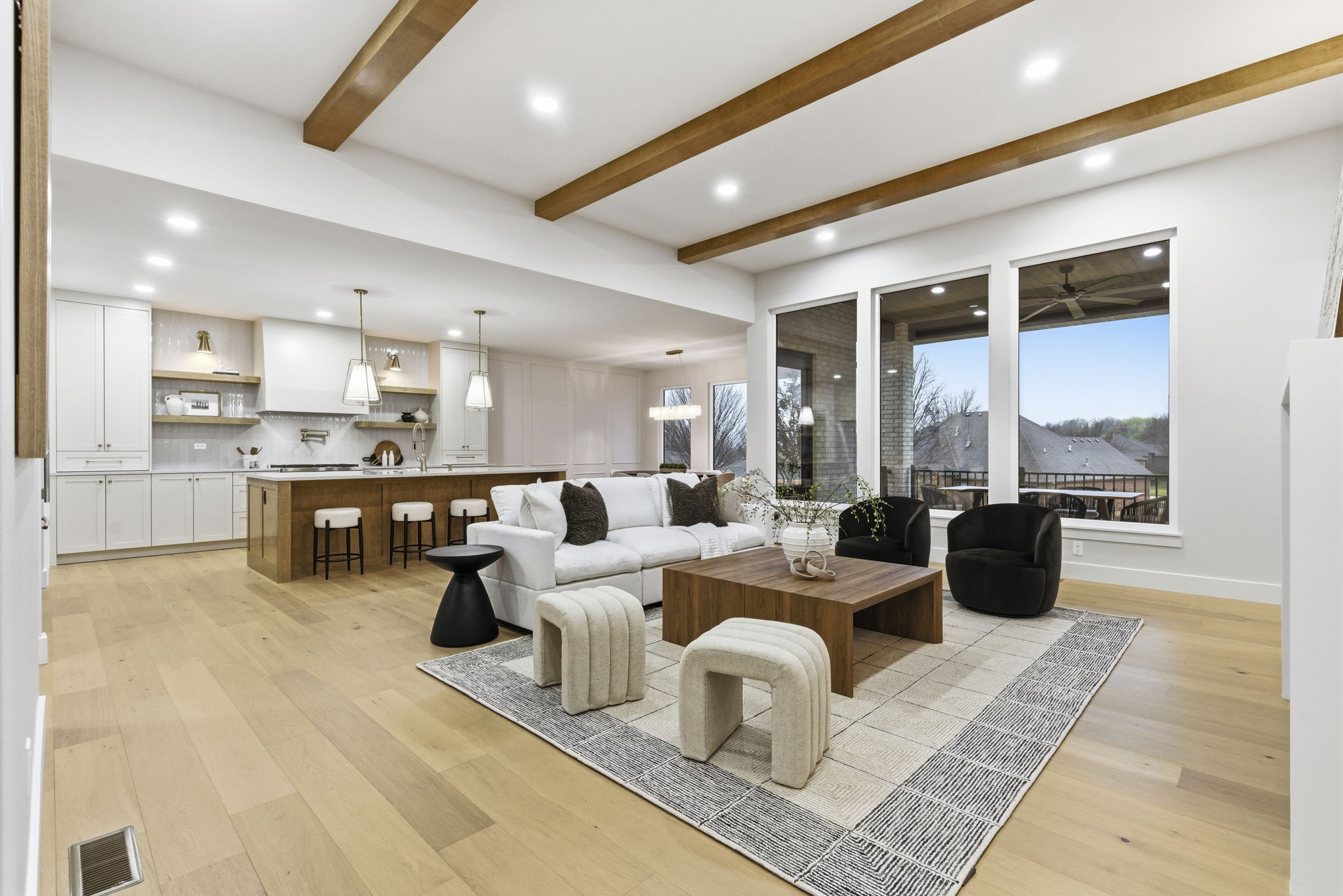
How home staging ROI shows up (pricing discipline, decision speed, less negotiation)
Home staging ROI is not only about sale price. It shows up as pricing discipline (fewer price cuts, stronger list-to-sale), faster buyer decisions (clear room definition, less hesitation), and reduced negotiation pressure (perception is set before the offer). This page explains those drivers, when ROI is stronger or weaker, and how to evaluate it for your listing in Springfield and Southwest Missouri.
For investment and scope, see how much home staging costs in Springfield, MO. For vacant home staging and builder and investor staging, we design for listing performance, not decoration.
ROI drivers (where return comes from)
- Stronger listing photos — Higher click-through and more showings. Buyers judge the space before they walk in; room definition and scale in photos set expectations.
- Clearer room function — Fewer “what is this room?” questions. Each space has a clear use, which speeds decisions and reduces objection.
- Better showing flow — Buyers move through the home with less friction. Layout and placement support a logical path and consistent perception.
- Pricing stability — When presentation is aligned with price point, sellers are less likely to chase the market with cuts. Staging supports list price by controlling perception.
- Faster decision cycles — Less hesitation means fewer “we need to think about it” exits. Buyers who can visualize the space move faster.
- Reduced negotiation pressure — When the home is presented clearly, offers tend to be cleaner and concessions less aggressive. You remove hesitation before it becomes objection.
When staging ROI is lower
ROI is not guaranteed. It tends to be weaker when:
- The market is extremely hot and everything sells quickly — Staging still improves presentation and offer quality, but the gap between staged and unstaged may narrow when inventory is tight.
- The property has material defects staging cannot fix — Staging addresses perception and room definition, not structural or system issues. It does not replace repairs or disclosures.
- Scope is too small for the price point — A single room in a high-end listing may not shift perception enough; scope should match buyer expectations for that bracket.
- Timeline is too short — Rushed install or minimal term can limit how much you can improve photos and showing flow.
- Occupied staging with heavy constraints — When the seller cannot declutter or adjust layout, consultation-only has a ceiling. Vacant vs occupied home staging explains the tradeoffs.
Being clear about when ROI is lower helps you decide scope and set expectations. For home staging for Realtors, we focus on alignment with listing strategy so ROI is evaluated in context.
ROI by scenario
- Vacant homes — Largest visual lift. Full control over furniture, layout, and room definition. Best for empty listings where photo impact and showing flow matter most. Vacant home staging in Springfield, MO is built for this.
- Occupied homes — Consultation-driven clarity. Optimize what exists: declutter, simplify furniture, improve flow. ROI depends on how much the seller can implement. See vacant vs occupied for the decision framework.
- Builders and investors — Reduced holding time and pricing strength. Staging positions inventory for the target buyer and supports velocity. Builder and investor staging is designed for resale and timeline.
How to evaluate ROI for your listing (five steps)
- Define success — What does “return” mean for this listing? Fewer days on market, list-to-sale ratio, offer count, or reduction in price cuts. Align staging scope with that goal.
- Match scope to price point — Higher price brackets usually need stronger presentation. Under-staging can leave money on the table; over-staging for the segment may not pay off. Use the cost guide to think in scope, not square footage.
- Consider timeline — How long will the listing be active? Term and retrieval should align with your marketing window so the property stays photo-ready and showing-ready when it matters.
- Compare to the alternative — What happens if you do not stage? More price cuts, longer time on market, or weaker offers? Staging is an investment; compare it to the cost of not positioning.
- Request a proposal — We build scope around your listing strategy. For Springfield, Nixa, Ozark, Republic, and Willard, we align term and scope with how properties move in your market.
Related staging strategy
- Vacant Home Staging in Springfield, MO
- Home Staging for Realtors
- Builder & Investor Home Staging
- Home Staging Cost Guide
We serve Springfield, Ozark, Nixa, Republic, Willard, and Rogersville. Request a proposal to align scope and term with your listing.
Get a Home Staging Quote • Call 417-399-2233
FAQs
Does home staging increase sale price?
Staging is used to improve presentation and buyer confidence, which can support stronger offers and pricing stability in competitive markets. It does not change appraisal value; it influences perception and negotiation.
Does staging help homes sell faster?
Clear photos and room definition often improve click-through and showing quality, which can reduce time on market. Speed depends on scope, market, and how well staging aligns with buyer expectations.
Is staging worth it for builders and investors?
Staging is commonly used to position inventory for resale, support pricing, and reduce holding time. Scope and term are built around listing strategy and velocity. See builder and investor staging.
How do I know if staging will pay off for my listing?
Evaluate your goal (days on market, list-to-sale, offer count), match scope to price point, and compare the cost of staging to the cost of not positioning. Request a proposal and we will align scope with your strategy.
When is ROI weakest?
When the market is very hot and everything sells quickly, when the property has defects staging cannot address, when scope is too small for the price point, or when timeline or occupied constraints limit what can be done.